Friday, July 23, 2010

Books Versus Feature Films


Horton Hears a Who!


by Dr. Seuss


Many times it can be disappointing when a book is turned into a feature film because often the film is nothing like the book. In other words, the film does not live up to the grand expectations that the viewer might have.

In my opinion this was not the case with Horton Hears a Who! written by Dr. Seuss. Both the book and the movie were very similar. Each of the plots revolves around a speck of dust discovered by an elephant named Horton. On the tiny speck there is the microscopic town of Who-ville along with its miniscule inhabitants. Horton is the only one who can hear the voices of the people of Who-ville, and while he desperately tries to keep the speck safe, his fellow jungle friends think he’s nuts!

Generally speaking the movie was very much like the book with regard to the plot. There were a few differences; in the movie several new characters were introduced and advances in technology, such as computers and “Who Space” were evident in the film version. I enjoyed the book and the film. I would recommend both to young readers and movie-goers alike.



Addressing Diversity


Henry's Freedom Box: A True Story from the Underground Railroad

by Ellen Levine

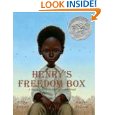
I take great pleasure in reading any book which chronicles this particular time period in American history; Ellen Levine’s book did not disappoint me! Henry’s Freedom Box: A True Story from the Underground Railroad is based on the real life experiences of Henry “Box” Brown. Henry was a slave who mailed himself in a box to the North to obtain his freedom. He got his nickname, “box”, because of his extraordinary journey to be free.

As a young boy, Henry was sold and separated from his mother. His new owner had a tobacco factory where Henry worked. As the story goes, Henry eventually married and had a family, but once again, the auction block intervened and he was stripped of his family for the second time in his life.

I feel that this book would be an excellent addition to any classroom collection and/or school media center. Through this book, young readers can learn about slavery along with its hardships and uncertainties, as well as courage, tenacity, and resourcefulness in the face of adversity.

In Henry’s Freedom Box, author, Ellen Levine, has exquisitely used the written word to describe an imaginative man with an unbelievable story. Adding to this, Kadir Nelson’s stunning illustrations help the reader to feel Henry’s experiences. I would recommend this book as an appropriate instructional tool for upper grade (intermediate) students.

Ellen Levine is also the author of Freedom’s Children.
Kadir Nelson is also the illustrator of Ellington Was Not a Street.

Picture Book Addressing Diversity


Smoky Night

by Eve Bunting

Smoky Night, Eve Bunting’s story about the Los Angeles riots was awarded the 1995 Caldecott Medal. The book successfully addresses racism using the vivid and colorful artwork of David Diaz. When the Los Angeles riots erupt in the streets of their community, a young boy and his mom learn the importance of getting along with others despite their cultural differences or ethnicity. Smoky Night is a story about how chaotic and dangerous circumstances can bring even the most diverse people (and cats!) together.

In the story, Daniel and his mother look out their window one evening and see looters on the street and far away flames. Daniel desperately holds onto his cat, Jasmine. Some time later, when it’s apparent that they need to flee their apartment, Daniel realizes that Jasmine is missing. Mrs. Kim, their neighbor, whom they do not know very well, has a cat that is missing, too. As the apartment building and the surrounding businesses are vacated, the cats must be left behind. But, Daniel does not believe that the cats are together because they don’t usually get along. Eventually, however, both cats are found hiding in the same place by one of the firemen.

I feel that this book would be an invaluable addition to any school’s media center. The simplicity of the text provides an excellent catalyst for opening discussion with young children regarding others who are “not of their own people”.

Eve Bunting is the author of over 200 titles. Her writing examines critical social issues with sensitivity and understanding. She has succeeded to include diversity in much of her work. Every title she’s written focuses on a different issue. Some of her other books include Night Tree, Summer Wheels, Fly Away Home, How Many Days to America?, and One Green Apple.

Author, Yoshiko Uchida


Journey Home

by Yoshiko Uchida


This book gives a poignant account of one Japanese-American family’s efforts to return to their former lives following a three-year imprisonment by their fellow Americans. In the story, twelve-year-old Yuki and her parents have just been released from Topaz, one of numerous concentration camps used to detain west coast Japanese after the attack on Pearl Harbor at the start of World War II. The story describes the difficulties endured by Yuki and her family as they try to regain some sense of normalcy. They discover that there are no houses to rent, no jobs, and that old friends have changed. Unfortunately, Yuki and her family soon learn that the atmosphere of apprehension and suspension created by the war have caused many Americans to hate the Japanese.

I enjoyed this book and can appreciate the author’s desire to document forgotten events and enlighten future generations regarding the ignorant injustices inflicted on Japanese-Americans during World War II. Many of Uchida's books are about Japanese children; however only Journey Home and Journey to Topaz relate the wartime experiences of Japanese-Americans.

Uchida’s book fills a huge need to chronicle the brutal and shameful treatment wreaked upon Japanese-Americans during World War II. Journey Home is a rich and genuine story that presents an insightful peek into a heartbreaking period in our country’s history. Yuki, her family, and her friends will linger in the reader’s mind as very likeable and spirited people. Yoshiko Uchida is the author of numerous books. Other titles written by her include Desert Exile, Journey to Topaz, Picture Bride, A Jar of Dreams, and The Bracelet.

Author and Illustrator, Jerry Pinkney


Back Home


Written by Gloria Jean Pinkney

Illustrated by Jerry Pinkney


The illustrations in author Gloria Jean Pinkney’s first picture book entitled, Back Home, are another superb testament to the talents of her husband, artist, Jerry Pinkney. The plot of this book is based upon Mrs. Pinkney’s own childhood experiences, and tells the reader about eight-year-old Ernestine who lives with her family up North. But, her roots are back in Lumberton, North Carolina, the place where she was born, where her mama grew up, and where her extended family lives. A long train ride takes Ernestine to visit her great-Uncle June, great-Aunt Beula, and Cousin Jack. As soon as she arrives, Ernestine feels she’s at home! It’s wonderful to see her family again, and Ernestine loves the ol’ family farm, the countryside, and especially her mama’s old room. While there, Ernestine has a chance to visit the house where she was born and to pay respects at her grandmother’s grave.
The visit is wonderful except for the occasional teasing from Cousin Jack about how “citified” she is!

This tender and charming tale is more of a nostalgic journey than a story with a plot; an account of family, days gone by, and the most important things in life. Artist Jerry Pinkney’s artwork, accomplished by using pencil, colored pencils, and watercolors balance this description of a young African-American girl’s adventure in years past.

I enjoyed this book because of its reminiscent nature and its reminders of a simpler time. The artwork is beautiful, done with the same artistic expertise readers have come to expect from Mr. Pinkney. Gloria Jean Pinkney is also the author of Sunday Outing. Other books illustrated by Mr. Pinkney are The Lion and the Mouse, The Ugly Duckling, Noah’s Ark, and Aesop’s Fables.

Thursday, July 22, 2010

2010 Coretta Scott King Award


Bad News for Outlaws: The Remarkable Life of Bass Reeves, Deputy U.S. Marshal


by Vaunda Micheaux Nelson


Regardless of the depictions on TV and in the movies, there were African Americans in the Old West. Bad News for Outlaws: The Remarkable Life of Bass Reeves, Deputy U.S. Marshal, tells the story of one of those African Americans. Written by Vaunda Micheaux Nelson and illustrated by R. Gregory Christie, this book was awarded the Coretta Scott King Award book in 2010.


Bass Reeves was born a slave circa 1838 in Texas; however he ran away from his master during the Civil War. He then lived with Native Americans in Indian Territory (what is now Oklahoma) until the war was over. Following the war, he established himself in neighboring Arkansas. In 1875 the U.S. government sent Judge Isaac C. Parker to Indian Territory. His job was to bring law and order to the area, and he was directed to hire 200 deputy marshals; one of those was Reeves. During his 32-year tenure as a marshal, Bass Reeves arrested thousands of outlaws and was reported to have captured the notorious Belle Starr!


I liked this book not only because of the time in history it details, but I feel that it is an exceptional read for children because it portrays a man of commendable character despite the many obstacles in his life. Author Nelson depicts Bass Reeves as a man of duty and courage who was honest, hardworking, and had a keen sense of right and wrong. Another feature about this book that I liked was the websites and additional reading resources that were listed at the end. Great for enhancing social studies instruction!


Overall, Bad News for Outlaws: The Remarkable Life of Bass Reeves, Deputy U.S. Marshal is an exciting and historical story that I highly recommend. Other books written by Vaunda Micheaux Nelson include Who Will I Be, Lord?, Possibles, Mayfield Crossing, and Beyond Mayfield.

Newbery and Caldecott Medals: What's the Difference?

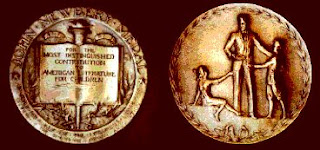
The Newbery and Caldecott Medals are considered to be the two most prestigious awards for children's literature in the United States. Both medals are awarded by the Association for the Library Service to Children, a division of the American Library Association. The awards are considered to be equal in status with regard to literary excellence and artistic distinction.


Newbery Medal and Honor Awards


The Newbery medal is given to the author of the most distinguished contribution to American literature for children. The award has been given since 1922, and it was the first children's literary award in the world. The award was named for John Newbery, an 18th century English publisher of juvenile books. The winner of the award is announced every year in January. In addition to the Newbery medal, extra citations referred to as the Newbery Honor are given to praiseworthy runners-up. To be considered for the Newbery Medal award, a book must be published the previous year in English and in the United States. The author must be a citizen or a resident of the United States. Also, the book must contribute to literature, stand alone, and relate to a child audience. Finally, the book must be judged on its characters, plot, presentation, setting, style, and theme.

Caldecott Medal and Honor Awards


The Caldecott medal is given each year to the artist of the most distinguished children’s American picture book. The award was named for 19th century English illustrator, Randolph Caldecott and was first presented in 1938. In addition to the Caldecott medal, extra citations referred to as the Caldecott Honor are given to exemplary runners-up. To be considered for the Caldecott Medal award, a book must be published in English in the United States during the preceding year, and the artist must be a citizen or resident of the United States. The illustrations must be the artist’s original work, and the book must exhibit admiration for children's understanding, talents, and appreciations. Additionally, the book must meet several artistic requirements.